Hidden Brain Code: Scientists Debunk 150-Year-Old Theory to Restore Speech
UCSF researchers have identified a brain region that plans words before they are spoken, offering a breakthrough for paralyzed patients to regain their voice.
 🩺Health
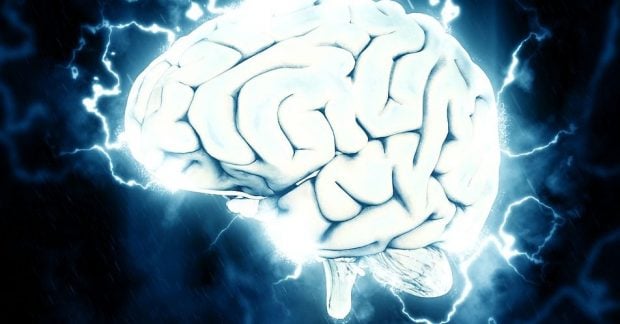
Photo: UNIAN
Key points
- UCSF scientists discovered the lpSTG region plans speech 0.25 seconds before utterance.
- The findings debunk a 150-year-old theory about Wernicke's area being only for comprehension.
- The discovery enables more accurate brain mapping and better speech-restoring neuro-interfaces.
The scientific community is on the verge of a revolution in treating speech impairments. Researchers at the University of California, San Francisco (UCSF) have discovered a specific area of the human brain responsible for forming words even before they are articulated. This discovery challenges long-held beliefs about speech processing mechanisms that have persisted for 150 years.
The study focuses on the left posterior superior temporal gyrus (lpSTG), a sub-region of Wernicke's area. Traditionally, this area was viewed solely as a center for speech comprehension. However, the team led by Edward Chang found that neurons in this region activate approximately a quarter of a second before a person starts speaking. They don't just process meaning; they create a blueprint of the upcoming word, encoding its length, syllable count, and usage frequency.
New Horizons for Medicine and Technology
Published in the journal Science, this research solves a long-standing neurological puzzle: why damage to Wernicke's area often disrupts a person's ability to produce speech as well as understand it. It appears that the brain systems for understanding and producing speech are much more closely linked than previously thought since the 1870s, when German neurologist Carl Wernicke first described the area.
- The identified zone activates 0.25 seconds before speech begins.
- Neurons encode physical word characteristics before sending signals to the vocal tract.
- The area could serve as a new signal source for brain-computer interfaces (BCIs).
The practical implications are profound. For neurosurgeons, this means more precise mapping of speech zones before surgery, reducing the risk of permanent speech loss. For engineers, it paves the way for advanced BCIs that translate thoughts into audible speech. During the experiment, researchers successfully decoded words intended by a severely paralyzed man using signals from this newly identified region.
"This discovery helps solve a long-standing mystery in neuroscience," the researchers stated, highlighting the dual role of the lpSTG in both perception and production.
For patients who have lost the ability to speak due to stroke or injury, these technologies represent a lifeline. By using the lpSTG as an alternative signal source, scientists can develop speech prostheses even when the motor areas controlling the mouth and throat are damaged beyond repair.
Source UNIAN — unian.ua/science/vcheni-znayshli-v-mozku-zonu-yaka-po-inshomu-vpliv… ↗
Read next
 💡Tech
How to fix video stuttering on your TV: expert tips
Many TV owners mistakenly blame their internet for choppy video, but the issue is often related to frame rate settings.
 🎓Education
International Operation 'Connect': Fraudulent Call Center Network Dismantled
Law enforcement agencies from four countries have dismantled a transnational criminal organization linked to the 'Khimprom' drug cartel.
 🚌Transport
Road Accident at Dvirtsova Square in Lviv: Pedestrian Injured
A traffic accident occurred at Dvirtsova Square in Lviv, resulting in injuries to a pedestrian. A car driver hit a resident of the Volyn region, and the victim was hospit…
 🏙️City
DTEK Denies Purchasing Russian Coal Following Full-Scale Invasion
The energy company DTEK has refuted claims of ongoing coal trade with Russia and clarified its financial relationship with Deutsche Bank.
 🚌Transport
Ukraine Continues Electricity Exports Despite Emergency Power Outages: Experts Explain
Despite regional power supply restrictions following attacks, Ukraine continues to export electricity to Europe. Energy experts assure that the core issue lies in transmi…
 🚨Events
New Aerial Threat: Russian 'Kub-10ME' Kamikaze Drones Spotted on the Front Line
Russian forces have deployed the upgraded 'Kub-10ME' UAVs, featuring advanced guidance systems and enhanced resistance to electronic warfare.